 Reviews


 Proudly American


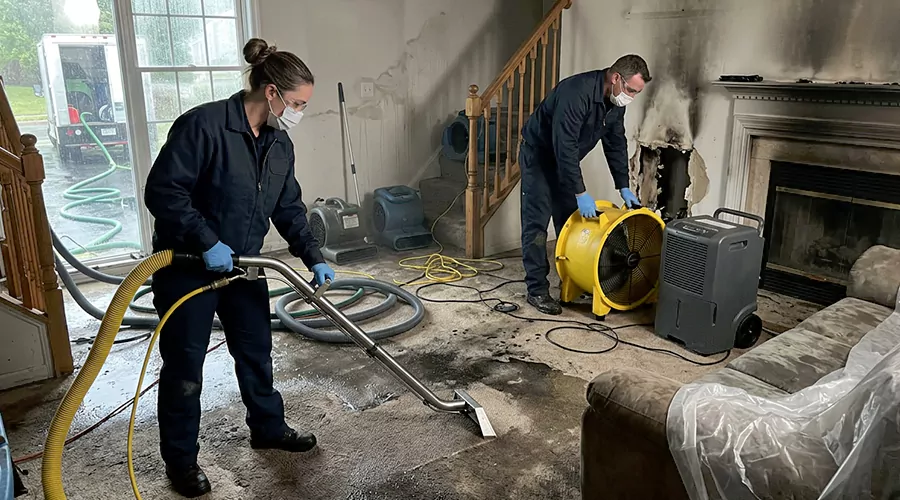
Fire damage should be cleaned only after the property has been cleared for safe entry and the full extent of smoke, soot, and water exposure has been checked. In 2026, fire damage restoration averages about $27,477, while many projects fall between $3,083 and $52,031.
Cleaning should follow a careful order. Loose soot needs different treatment from wet debris, while water left by firefighting can create a second source of damage that may require fire and water clean up.
The first goal isn't to make the room look clean. It is to prevent residue from spreading while identifying which materials can be cleaned and which have been damaged beyond safe reuse.
What Should You Do Before Cleaning Fire Damage?
Before beginning fire damage clean up, wait until fire authorities have confirmed that the property is safe to enter. A fire can weaken floors or ceilings even when flames are gone. Electrical systems may also remain unsafe after exposure to heat or firefighting water.
Start with these steps:
- Wait for approval before entering the building.
- Photograph each affected room before moving items.
- Keep people away from unstable areas.
- Avoid switching on damaged electrical equipment.
- Wear gloves and sturdy footwear.
- Use an N95 respirator when ash or fine residue is present.
- Limit movement through heavily sooted rooms.
- Separate clean belongings from affected items.
People with heart or lung conditions should avoid ash cleanup. Children and older adults should also stay away from areas where fire residue is being disturbed.
Do not start by scrubbing every dark surface. Soot particles are fine and can become embedded deeper when they are rubbed into porous material.
How to Clean Up Fire Damage Step by Step
Fire cleanup should move from documentation and debris control to soot removal before detailed surface cleaning begins. Water damage should also be handled early when hoses or sprinklers soaked the building. Each stage reduces the risk of spreading residue into rooms that were less affected by the fire.
Step 1: Document the Damage
Take photographs before moving damaged belongings when conditions are safe. Record burned areas and soot deposits. Include rooms that show smoke staining even when flames never reached them.
Useful documentation includes:
- Wide photos of affected rooms
- Close photos of burned materials
- Visible soot on walls
- Smoke staining around vents
- Water left from firefighting
- Damaged furniture
- Heat-affected appliances
- Belongings that may need disposal
Avoid discarding damaged property before making an inventory when an insurance claim may be involved. The Red Cross recommends contacting the insurer and keeping receipts related to the fire loss.
Documentation also helps you track areas that need deeper inspection after visible debris has been removed.
Step 2: Remove Firefighting Water
Water left after a fire can soak drywall or flooring. Wet insulation can also hold moisture inside closed cavities. Standing water should therefore be addressed before detailed smoke cleaning begins.
Water cleanup can include:
- Removing standing water
- Extracting saturated carpet
- Lifting wet rugs
- Opening accessible wet areas
- Running dehumidification
- Checking walls for hidden moisture
Current 2026 cost data places water cleanup after a fire around $1,000 to $6,000 depending on the affected area. Wet building materials should be addressed quickly because prolonged moisture can lead to additional damage.
Fire and water damage can occur in the same room even when flames were limited. A sprinkler system may protect the structure from a larger fire while still leaving extensive moisture behind.
Step 3: Remove Loose Debris Carefully
Large burned debris should be separated from items that may still be salvageable. Avoid unnecessary handling because soot can transfer from one object to another.
Fire damage removal can involve:
- Burned drywall sections
- Charred insulation
- Destroyed flooring
- Melted household items
- Damaged ceiling material
- Unsalvageable furniture
- Loose fire debris
Wear suitable protective clothing while handling debris. Fine ash can irritate the skin or respiratory system.
Do not dry sweep ash aggressively. EPA guidance recommends limiting activities that send ash back into the air. Lightly misting suitable ash or using damp cleaning methods can reduce airborne particles.
Step 4: Remove Loose Soot Before Wet Cleaning
Loose soot should usually be removed before liquid cleaners are applied. Wetting some soot too early can smear the residue across the surface.
For suitable surfaces, begin with:
- Keep the cleaning area isolated.
- Wear appropriate protective equipment.
- Avoid rubbing the soot with bare hands.
- Use a HEPA-type vacuum where appropriate.
- Keep the vacuum nozzle slightly above delicate surfaces.
- Work slowly to avoid spreading particles.
EPA guidance warns against using a typical household vacuum for ash because it can send fine particles back into indoor air. A HEPA-type vacuum is a safer option for suitable dusty surfaces.
Soot clean up also requires patience. Several light passes can be safer than aggressive scrubbing that pushes residue deeper into the material.
Step 5: Clean Smoke Damage From Walls
Smoke damage on walls can range from a faint film to thick oily residue. The cleaning method should depend on what burned and the wall finish. Dry residue behaves differently from the sticky soot produced by some cooking fires.
Begin with a small test area. This shows whether the cleaning method is removing residue or spreading it.
For washable hard surfaces:
- Remove loose soot first.
- Use a cleaner suited to the finish.
- Work in small sections.
- Keep dirty cloths separate from clean cloths.
- Rinse when the product requires it.
- Allow the surface to dry fully.
The American Red Cross recommends cleaning soot from suitable hard surfaces with mild soap or detergent. Walls should be cleaned in small sections to reduce streaking.
Fire damage cleaning shouldn't end with fresh paint. A new coating can trap smoke odor or cover residue when the underlying surface hasn't been cleaned correctly.
Step 6: Clean Hard Floors and Nonporous Surfaces
Hard surfaces are usually easier to clean than porous materials because smoke residue stays closer to the surface. However, soot can scratch finishes when heavy particles are dragged across them.
Clean hard flooring with repeated gentle passes rather than aggressive scrubbing.
Suitable surfaces may include:
- Ceramic tile
- Glass
- Metal fixtures
- Some sealed countertops
- Certain finished wood surfaces
Do not move a dirty mop or cloth directly into an unaffected room. This can carry soot into a space that originally had little smoke exposure.
Fire cleaning may require several rounds before a wipe test comes back clean. One pass isn't always enough when fine residue has settled over a large room.
Step 7: Sort Clothing and Other Fabrics
Smoke can become trapped in clothing or bedding even when the items show no visible soot. Washable fabrics often need repeated cleaning because odor can remain after the first wash.
Sort fabric items by condition:
- Light smoke exposure
- Visible soot contamination
- Water-soaked fabrics
- Heat-damaged items
- Items with persistent odor
Follow the care label before washing any fabric. Test specialty cleaning products on a hidden area before treating an entire item.
The Red Cross notes that some washable clothing may need more than one cleaning cycle before smoke odor is removed.
Avoid drying a heavily smoky item between early cleaning attempts when the treatment instructions recommend repeated washing. Heat can make some remaining odors harder to address.
Step 8: Address Smoke Odor at the Source
Smoke odor is difficult to remove when soot or burned material remains inside the property. Fragrance products can cover the smell for a short period without removing its source.
Smoke damage remediation should begin with physical cleaning.
Focus on:
- Removing burned debris
- Cleaning soot-covered surfaces
- Washing suitable fabrics
- Checking unfinished wood
- Inspecting insulation
- Cleaning affected contents
- Removing materials that cannot be restored
FEMA guidance for residential smoke damage recommends source cleaning rather than odor-masking products. Ventilation can help with light smoke odor when outdoor air is clean enough for windows to be opened.
Smoke damage to house interiors can be wider than the burn area. Odor may remain in closets or other spaces that show no direct flame damage.
Step 9: Check the HVAC System Before Running It
Air movement can distribute soot into clean areas when the HVAC system is turned on too soon. Filters and accessible components should be checked after significant smoke exposure.
Look for signs such as:
- Soot around supply vents
- Dark residue on return grilles
- Strong odor near registers
- Visible debris inside accessible duct openings
- Smoke odor when the system operates
FEMA guidance advises against running an air handler before the bulk of soot and ash has been removed because the system can spread particles through the home.
A fresh filter can help after the major residue has been controlled. The correct filter should match the equipment specifications.
Step 10: Dry Before Rebuilding
Firefighting water can remain behind walls after surface cleanup is finished. Repair work shouldn't begin until wet structural materials have dried enough for reconstruction.
Check:
- Wall framing
- Subfloors
- Insulation
- Drywall edges
- Cabinet bases
- Flooring beneath carpet
Fire damage repair may involve replacing drywall or flooring after the cleanup phase. Burned framing can require a different level of reconstruction.
Fire damage reconstruction should happen only after moisture and smoke problems have been addressed. Rebuilding over unresolved contamination can hide rather than correct the damage.
What Types of Fire Damage Need Different Cleanup Methods?
Fire residue isn't the same after every fire. The material that burned affects the type of soot left behind. Water or extinguisher residue can add another layer of contamination. Understanding the damage type helps prevent a cleaning method from making the surface worse.
Common conditions include:
| Damage Type | Common Appearance | Main Cleanup Concern |
|---|---|---|
| Dry soot | Fine powdery residue | Spreads easily when disturbed |
| Oily soot | Sticky dark coating | Smears during aggressive wiping |
| Ash | Fine gray particles | Becomes airborne during dry sweeping |
| Smoke film | Light discoloration | Can cover areas far from flames |
| Water damage | Wet or swollen materials | Hidden moisture |
| Heat damage | Warping or charring | Material may not remain usable |
Smoke damage from fire can reach several rooms even when flames stay in one area. Door openings and pressure differences allow fine particles to travel through the building.
Soot damage also varies by surface. A sealed countertop may respond to cleaning while unfinished wood can absorb residue more deeply.
The main mistake is assuming that one cleaner works everywhere.
What Should Be Thrown Away After a Fire?
Items should be discarded when heat or contamination makes safe reuse doubtful. Food and medicine deserve particular caution because packaging may not protect the contents from heat or smoke. Burned porous materials may also hold odor even after surface cleaning.
Items more likely to require disposal include:
- Food exposed to heat or soot
- Medicine exposed to smoke
- Melted plastic food containers
- Severely burned fabrics
- Charred particleboard
- Badly damaged insulation
- Porous items with heavy contamination
- Items that cannot be safely cleaned
The Red Cross advises discarding food and medicine exposed to heat or smoke.
Valuable photographs or family objects deserve a different approach. FEMA recommends limiting handling because soot is abrasive and can become permanently embedded through repeated touching.
What Warning Signs Mean Fire Damage Is More Serious?
Fire damage is more serious when residue appears far beyond the burn area or structural materials have changed shape. Persistent smoke odor can indicate contamination in porous materials. Water damage can also remain hidden after firefighting. Several warning signs together usually point to a larger cleanup scope.
Watch for these signs:
- Ceiling sections begin sagging.
- Floors feel unstable.
- Structural wood is deeply charred.
- Soot covers several rooms.
- Smoke odor remains after surface cleaning.
- Dark residue appears around air vents.
- Drywall remains wet after the fire.
- Insulation has become saturated.
- Electrical outlets show heat damage.
- Smoke odor appears when the HVAC system runs.
- Walls remain greasy after basic cleaning.
- Burned materials continue producing strong odor.
Home fire cleanup becomes difficult when smoke has entered wall cavities or insulation. These hidden materials can continue releasing odor even after visible surfaces look clean.
Persistent residue should not simply be painted over. The source should be identified before cosmetic repairs begin.
How Much Does Fire Damage Cleanup Cost in 2026?
Fire damage restoration costs average about $27,477 in 2026, with many projects ranging from $3,083 to $52,031. Minor smoke remediation can start around $800. Severe structural losses can reach $180,000 when major rebuilding is required.
Current cost estimates break common cleanup work into several categories.
| Type of Work | Typical 2026 Cost |
|---|---|
| Smoke damage treatment | $200 to $1,200 |
| Soot removal | $2,000 to $6,000 |
| Water damage cleanup | $1,000 to $6,000 |
| Duct cleaning | $250 to $500 |
| Furniture deodorizing | $200 to $1,000 |
| Thermal fogging | $200 to $600 |
| Ozone treatment | $400 to $800 |
| Overall fire restoration | $3,083 to $52,031 |
Average structural restoration runs about $4 to $7 per square foot according to current 2026 pricing data.
Fire damage restoration cost rises when soot or water reaches a larger part of the home. Structural repairs can push the project well beyond the cost of surface cleaning.
The amount of visible burning isn't the only cost factor. A small fire can spread smoke through many rooms and create a surprisingly large cleaning area.
When Should You Call a Professional?
Professional help is appropriate when the building has structural damage or heavy soot covers a large area. Smoke inside HVAC components can also require specialized cleaning. Firefighting water trapped inside walls adds another concern. Large contamination zones are difficult to clean without spreading residue.
Consider fire damage cleanup services when:
- Structural framing is burned.
- The roof has been damaged.
- Ceilings or floors appear unstable.
- Several rooms contain heavy soot.
- Smoke entered the HVAC system.
- Large wall sections need removal.
- Firefighting water soaked insulation.
- Electrical systems were heat damaged.
- Smoke odor remains after careful cleaning.
- Valuable belongings need specialized treatment.
- Heavy residue keeps transferring to clean cloths.
- The cleanup area is too large to isolate safely.
Soot removal services can use HEPA filtration and other controlled methods where fine residue covers a large area.
Smoke damage cleaning can also involve different methods for porous materials that ordinary household cleaners cannot address effectively.
Fire and smoke damage restoration may include later structural repairs after the cleaning phase is complete. The purpose of the first stage is to leave the property clean enough and dry enough for rebuilding.
How Can You Prevent More Damage During Cleanup?
Secondary damage can occur when soot is carried into clean rooms or when firefighting water stays inside building materials. Careful movement and controlled cleaning reduce the area that needs restoration. Wet materials also need attention before mold or swelling creates another problem.
During cleanup:
- Keep foot traffic through sooty rooms low.
- Change dirty gloves before entering clean areas.
- Separate clean cloths from used ones.
- Avoid dry sweeping fine ash.
- Keep damaged electronics switched off.
- Remove standing water promptly.
- Don't paint over soot.
- Don't rebuild over wet materials.
- Keep cleaned belongings away from active work areas.
- Replace HVAC filters after residue is controlled.
Fire smoke damage cleanup should move from cleaner areas toward more contaminated areas. This reduces the chance of carrying residue backward into finished sections.
Another useful rule is to clean from high surfaces toward lower ones once loose contamination is under control. Settling particles can then be collected at the floor instead of contaminating an already finished surface.
Conclusion
Fire damage cleanup requires more than washing visible burn marks. Loose soot should be controlled before wet cleaning while firefighting water needs to be removed before repairs begin. Smoke can also reach rooms that never burned. Heavy contamination or structural damage deserves professional assessment. This week, check your smoke alarms and make sure household members know where to meet outside during a fire.
Frequently Asked Questions
Can you clean fire soot with water?
Not always. Some soot smears when wet and can become harder to remove. Loose residue should usually be removed before wet cleaning begins.
Can you paint over smoke damage?
Paint shouldn't be applied over untreated soot. The surface should be cleaned and fully dry before the correct primer or finish is considered.
How long does smoke odor last after a fire?
Smoke odor can remain until the materials holding the residue are cleaned or removed. Ventilation alone may not solve odor trapped in porous surfaces.
Can clothes be saved after smoke damage?
Many washable fabrics can be cleaned when they aren't burned or badly contaminated. Several washing cycles may be needed for persistent odor.
Should you turn on the HVAC system after a fire?
Avoid running the system when heavy soot remains in the property. Airflow can distribute particles into rooms that have already been cleaned.
Can fire damage cause mold?
Yes. Water from hoses or sprinklers can leave building materials wet after a fire. Moisture that remains trapped can create conditions that support mold growth.